
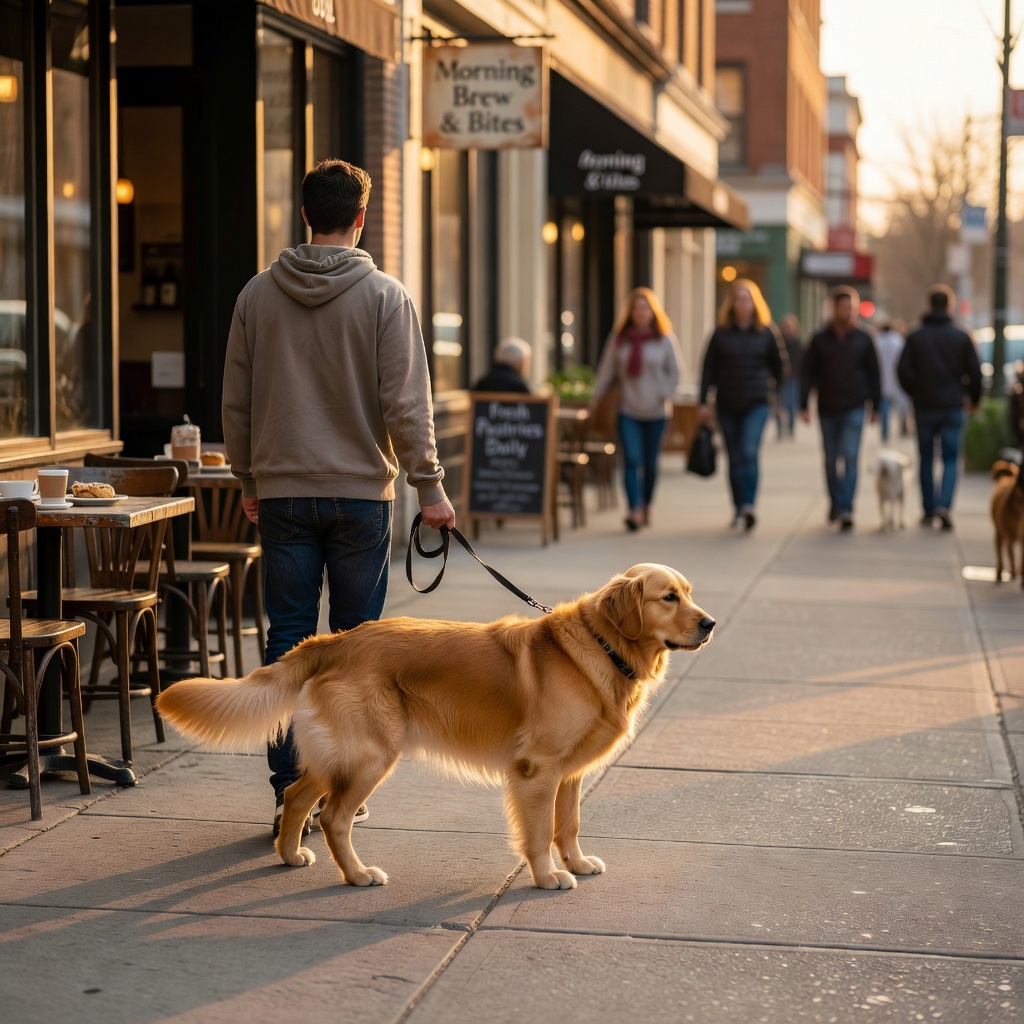
How to Stop Dog Pulling on Leash in the City: Loose Leash Walking Tips for Urban Dogs
The Chaos of City Walks: Why You're Feeling Dragged Along
Picture this: You're navigating a narrow sidewalk in the heart of the city, coffee in one hand, leash in the other. Your dog surges forward, eyes locked on a fluttering pigeon or the tantalizing whiff from a street vendor's cart. Cyclists zip by, strollers rumble past, and suddenly sirens wail in the distance. Your arm aches, your shoulder protests, and that once-joyful daily ritual feels like survival training. If this sounds familiar, you're not alone. For urban dog owners and apartment dwellers, leash pulling isn't just annoying—it's a full-body workout amid concrete chaos.
The good news? You can transform these drags into delightful loose leash walks. As a certified trainer who's walked thousands of city miles with reactive pups, I've seen firsthand how small shifts yield big results. No harsh corrections, no endless battles—just practical, science-backed strategies tailored for the urban jungle.
Why Traditional Leash Training Fails in the City
Out in the suburbs, a quiet park might let you practice basic heel commands with minimal interruptions. But city streets? They're a perfect storm of distractions—what I call 'trigger stacking.' Your dog isn't just pulling toward one squirrel; it's reacting to the cyclist whooshing inches away, the toddler screaming on a scooter, the discarded pizza slice glinting on the pavement, and that blaring car horn all at once.
Traditional methods like constant leash corrections or prong collars amp up the stress. Dogs learn through association—pulling leads to tension, which spikes adrenaline and cortisol. In a city dog walking tips scenario, this backfires: your pup associates the leash (and you) with frustration, not fun. Instead, we lean on positive reinforcement, rooted in operant conditioning principles from behavioral science. Reward calm behavior, and it sticks—even amid the urban buzz.
Rethink the Leash: From Control Tool to Communication Line
Here's the mindset shift that changes everything: Stop seeing the leash as a restraint and view it as a conversation. A slack leash is like a relaxed chat—clear signals flow both ways. When it tightens, tension mirrors back: your dog's stress signals yours, and vice versa, creating a feedback loop of pulling.
For loose leash walking urban dogs, the goal is a 'U-shaped' arc: loose enough to swing gently, tight enough for safety. This communicates, 'Good things happen when we're connected calmly.' Science supports it—studies on learning theory show dogs thrive on predictable rewards, not punishment, building confidence in unpredictable environments like crowded sidewalks.
Gear Up Right: Equipment for Urban Dog Training Success
Why Front-Clip Harnesses Are a Game-Changer for Leash Pulling Apartment Dogs
Ditch the collar for city walks—neck pressure can trigger gagging or escalation in high-stimulation spots. Enter the front-clip harness: the clip sits at the chest, so pulling naturally redirects the dog toward you, turning their momentum into a gentle pivot. It's physics meets kindness—no jerking required.
Look for padded, adjustable models like those from Freedom or Ruffwear. Pair with a 4-6 foot leash (not retractable—those teach pulling). This setup prioritizes safety: if a scooter zips by, you're not risking tracheal damage. Pro tip: Fit it snug but with two fingers' space under the chest strap for comfort during long city dog walking tips sessions.
- Front-clip for redirection without pain.
- Lightweight for agility in crowds.
- Reflective accents for dusk visibility.
How to Stop Dog Pulling on Leash in the City: The Stop-Wait-Reward Method
This is your go-to for dog pulling in crowds. It's simple, consistent, and leverages your dog's desire to keep moving. Practice in low-distraction spots first, like your apartment hallway, then graduate to the street.
- Stop Immediately: The instant the leash tightens, plant your feet. No yanking—just freeze like a statue. Your dog will look back, puzzled.
- Wait for Slack: Breathe deeply (it models calm). When they ease back, creating even a tiny loop in the leash, mark it with a cheerful 'Yes!' or clicker.
- Jackpot Reward: Deliver a high-value treat (think chicken bits) right at your side. Praise softly: 'Nice easy!'
- Resume Walking: Take one step forward. If pulling restarts, repeat. Sessions end on wins—keep it short, 5-10 minutes.
Why it works: Dogs are opportunists. Pulling gets them nowhere; slack earns adventure and treats. In weeks, you'll notice proactive loose leash walking urban dog behavior, even past that tempting food truck.
Master Threshold Management: Handling Reactivity in Tight Spaces
Spot the Signs Before They Pull
Urban training shines in prevention. Watch for pre-pull cues: stiff body, forward ears, whale-eye (whites showing), or pacing. Your dog's threshold is their stress tipping point—crowds lower it fast.
City hacks for space:
- Hug the building edge or cross to quieter curbs.
- Use doorways as 'reset zones'—pause, treat calm.
- Time walks for off-peak: early mornings beat brunch rush.
- Enlist a 'pattern game': weave around cones or park benches to build focus.
In the city, space is gold. Creating it proactively turns potential meltdowns into confident strides.
Layer in Engagement Games
Boost with 'look at me' cues: Hold a treat by your face, reward eye contact. Amid dog pulling in crowds, this refocuses without force.
Ready to Master Loose Leash Walking? Your Next Step
You've got the tools: mindset, gear, method, and management. Consistent practice—10 minutes daily—will have your apartment dog strolling city streets like a pro. Imagine tension-free walks, where you both enjoy the buzz rather than battle it.
For deeper dives into urban dog training, including video demos and community support, join Module 2 of the City Dog Blueprint course. 'Mastering the Leash' is game-changing for overwhelmed owners just like you. Your calmer walks start now—leash up and go.